
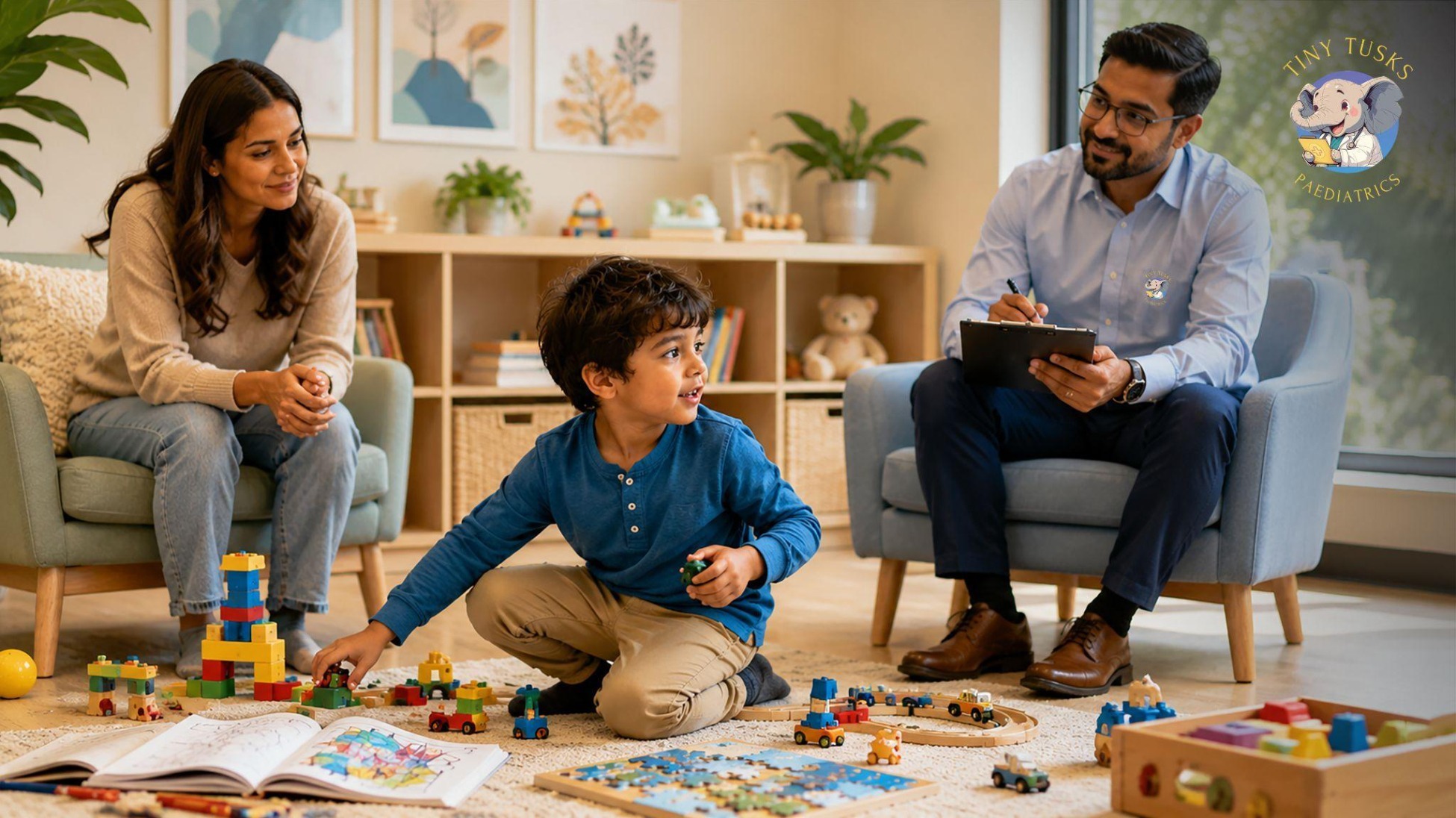
If you have found yourself wondering why your child never seems to slow down, struggles to follow instructions, or moves from one activity to another without finishing anything, you are not alone.
Many parents come to appointments feeling worried, confused, and unsure whether what they are seeing is simply part of childhood or something more.
Some children seem constantly “on the go”. Others appear unable to focus, become easily distracted, or struggle to sit still during activities that other children their age enjoy.
Parents often ask themselves:
Is this normal behaviour for their age?
Are they simply energetic or strong-willed?
Will they grow out of it?
Could this be ADHD?
These questions can become increasingly difficult as children start childcare, preschool, or primary school and expectations around attention, listening, and self-regulation begin to increase.
The truth is that every child has moments of impulsivity, distraction, or high energy. However, when these behaviours are persistent, occur across different settings, and begin affecting learning, relationships, or daily life, further assessment may be helpful.
One possible explanation may be Attention Deficit Hyperactivity Disorder (ADHD).
Understanding ADHD in Children
Attention Deficit Hyperactivity Disorder is a neurodevelopmental condition that affects how a child regulates attention, activity levels, and impulses.
ADHD is one of the most common neurodevelopmental conditions seen in childhood, yet it is also one of the most misunderstood.
Many people still imagine ADHD as simply a child who cannot sit still.
In reality, ADHD can look very different from one child to another.
Some children are primarily inattentive and may appear dreamy, forgetful, or easily distracted.
Others are highly active and impulsive.
Many experience a combination of both. This is why ADHD symptoms in children can sometimes be missed, particularly when the signs are subtle or when children develop strategies to compensate for their difficulties.
Early Signs of ADHD in Children
The early signs of ADHD in children can vary depending on age, personality, and developmental stage.
Potential signs may include:
- Difficulty sustaining attention during play or learning activities
- Frequently moving from one activity to another without finishing
- Becoming easily distracted by sounds, movements, or surrounding events
- Difficulty following instructions
- Frequently losing toys, school items, or belongings
- Forgetfulness during everyday activities
- Difficulty waiting for their turn
- Interrupting conversations or games
- Acting before thinking about consequences
- Excessive talking
- High levels of physical activity compared with peers
Many of these behaviours occur occasionally in all children.
The difference with ADHD is often the frequency, severity, and impact these behaviours have on everyday life.
ADHD Signs in Toddlers
ADHD signs in toddlers can be particularly difficult to recognise. Toddlers are naturally curious, active, and impulsive as part of normal development.
For this reason, ADHD diagnosis in children is rarely made during the toddler years.
However, some parents notice behaviours that seem more intense or persistent than expected for age.
These may include:
- Extreme difficulty remaining engaged in activities
- Constant movement throughout the day
- Significant difficulty with transitions between activities
- Very short attention spans even for preferred activities
- Frequent impulsive behaviour that places the child at risk of injury
- Difficulty settling for meals, stories, or quiet activities
- Ongoing challenges with sleep or emotional regulation
These signs do not automatically mean a child has ADHD.
However, when concerns continue over time, discussing them with an experienced developmental paediatrician can provide reassurance and guidance.
When Difficulties Become More Noticeable
Many families report that concerns become more obvious when children begin preschool or school.
As classroom expectations increase, children are asked to:
- Sit and listen for longer periods
- Follow multi-step instructions
- Complete tasks independently
- Manage transitions between activities
- Organise their belongings
- Regulate emotions and behaviour in group settings
For some children, these expectations highlight difficulties that were previously less noticeable at home.
Teachers are often among the first people to raise concerns about attention, impulsivity, or activity levels.
The Most Important Message: Not Every Active Child Has ADHD
One of the biggest misconceptions surrounding ADHD is that every energetic child has the condition.
In reality, there are many reasons children may appear inattentive, restless, or impulsive. Sleep difficulties, anxiety, learning disorders, hearing problems, developmental differences, emotional stress, and medical conditions can all influence behaviour and concentration.
This is why behaviour should always be considered within the context of the whole child. A diagnosis should never be based on a short observation or a single checklist alone.
Why Specialist Assessment Matters
One of the challenges surrounding ADHD is that opinions can vary widely.
Some families are told their child definitely has ADHD.
Others are told their concerns are simply part of normal childhood development.
This can leave parents feeling uncertain about what to do next.
A comprehensive ADHD assessment looks beyond behaviour alone and focuses on understanding the whole child.
Assessment may involve exploring:
- Developmental history
- Behaviour patterns across different settings
- Learning progress
- Emotional wellbeing
- Sleep patterns
- Family history
- School or preschool feedback
- Medical history
This process helps ensure families receive balanced, evidence-based advice tailored to their child’s individual needs.
How is ADHD Diagnosed in Children?
There is no single blood test, scan, or questionnaire that can diagnose ADHD.
Instead, ADHD diagnosis in children involves gathering information from multiple sources over time.
This may include parents, teachers, childcare educators, and healthcare professionals.
The goal is not simply to determine whether ADHD is present.
It is to understand how a child is functioning socially, emotionally, academically, and developmentally so that the most appropriate support can be provided.
When Should Parents Seek an Assessment?
Families may consider seeking an ADHD assessment if concerns are affecting:
- Learning and academic progress
- Friendships and social relationships
- Emotional wellbeing
- Family life
- Daily functioning at home or school
Seeking an assessment does not automatically lead to a diagnosis.
Sometimes families receive reassurance that development is progressing normally.
Sometimes an alternative explanation is identified.
Sometimes ADHD forms part of the picture.
Whatever the outcome, parents often feel relieved to have greater clarity and a plan moving forward.
Why Families Choose Tiny Tusks Paediatrics
Parents are often looking for more than a diagnosis.
They want someone who will listen carefully, assess thoroughly, and provide clear, honest guidance.
At Tiny Tusks Paediatrics, families receive care that is grounded in evidence, compassion, and a genuine commitment to helping children thrive.
Dr Kalpesh Jain’s experience in developmental paediatrics allows him to assess attention, behaviour, learning, and developmental concerns within the broader context of a child’s overall health and development.
Rather than focusing solely on whether ADHD is present, the focus remains on understanding how a child is learning, functioning, interacting, and progressing overall.
A Supportive Path Forward
Parents are often looking for answers, reassurance, and a clear path forward.
When questions about attention, behaviour, or learning arise, uncertainty can quickly become overwhelming.
Sometimes ADHD is part of the answer. Sometimes it is not.
What matters most is having access to experienced healthcare professionals who can assess your child carefully, explain the findings clearly, and guide your family towards the most appropriate next steps.
At Tiny Tusks Paediatrics, families across Bella Vista, Norwest, The Hills District, Blacktown, Parramatta, and Greater Western Sydney receive thoughtful, evidence-based care designed around the individual needs of each child.
Whether the outcome involves reassurance, monitoring, school support strategies, or further intervention, our goal remains the same: helping children thrive while giving parents confidence in the journey ahead.


